
Water parks, beach towns, and historic stops within easy reach: Marineland and PortAventura for slides and coasters, Sitges and Tossa de Mar for calm-water beaches, and Montserrat, Girona, and Cardona for monasteries, walled old towns, and a salt-mine cave tour. Most are reachable by train, and the listings note travel times and how to get there without a car.
On the map
13 spots on the map
What’s in this collection
A water park and marine zoo in one, with around a dozen slides from gentle kids' chutes to the dark 12-meter Black Hole and the new six-slide Splash Tower, plus a wave pool and the Children's Paradise splash area for little ones. Daily shows feature dolphins and sea lions, and there's a butterfly garden, shop, and restaurants on site.
Illa Fantasia spreads 22 slides across a hillside above the Maresme coast, with three large pools, a wave pool, and a lake for stand-up paddle. Younger kids get their own zone of mini slides and shallow water built for ages 2 to 10. There are six food outlets, picnic lawns, lockers, and free parking on site.
Aqualeón spreads down a wooded hillside near El Vendrell, about an hour southwest by car. A dozen slides drop through the trees alongside a wave pool, a rapid river, and a picnic area just outside the gates. The safari that once shared the site closed, so the park now runs on water rides alone.
A theme park in Salou, about an hour south by car or train, split into six themed worlds: Mediterrània, Far West, México, China, Polynesia, and SésamoAventura for younger kids. Rides range from the Tami-Tami kiddie coaster and the Sesame Street zone to the big drops on Dragon Khan and Shambhala. The neighboring Caribe Aquatic Park, with slides and a wave pool, needs a separate ticket.
A 35-minute train ride south of the city reaches a small seaside town with 17 sandy beaches strung along a 4km promenade. Breakwaters keep the water calm and shallow, several beaches have lifeguards and pedalo hire, and the flat old quarter behind the seafront has ice-cream shops, a hilltop church, and easy streets for strollers.
A small Maresme town with two sandy beaches, Platja de la Riera and Els Tres Micos, both Blue Flag rated and backed by a flat seafront promenade good for scooters and strollers. The R1 station sits a few minutes from the sand. The center holds the only publicly owned thermal baths in Catalonia, with spring water at around 39C.
Tossa de Mar sits about 100km up the Costa Brava, roughly a 90-minute drive north. The headland is wrapped by the Vila Vella, the only fully walled medieval old town left on the Catalan coast, with stone towers and a lighthouse you can walk up to. Below it, Platja Gran is a 380m sheltered sand beach, and quieter Mar Menuda rents kayaks and snorkel gear.
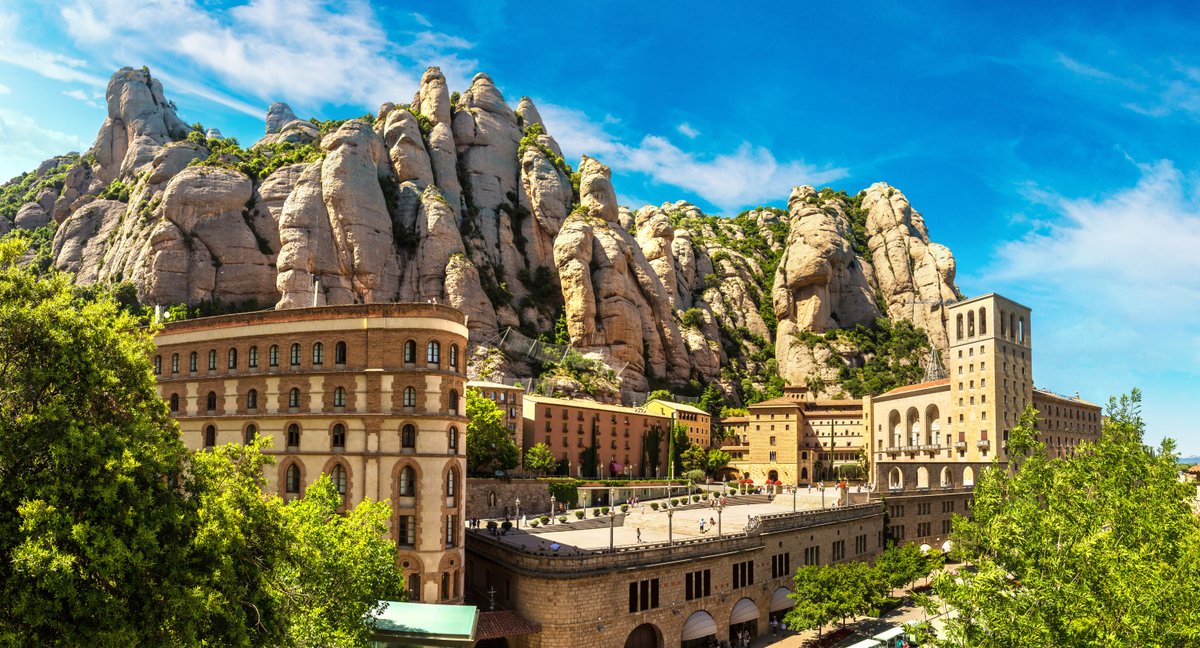
A Benedictine monastery built into a serrated rock mountain about 50km northwest of the city, reached by rack railway or cable car from the R5 train line. The basilica holds La Moreneta, the Black Madonna statue, and the Escolania boys' choir sings here most days. Two short funiculars run from the monastery: one climbs to ridge-top trails and viewpoints, the other drops to the Santa Cova cave chapel.
Girona's walled old town climbs a hill above the Onyar river, where rows of houses painted ochre, red, and yellow line the water. Kids can walk the medieval ramparts on the Passeig de la Muralla, wind through the narrow lanes of the Jewish Call, and climb the 90 steps to the Cathedral, which has the widest Gothic nave in the world and stood in for King's Landing in Game of Thrones.
Vic sits about an hour north of the city by car or R3 train. Its Plaça Major is one of the largest porticoed squares in Catalonia, ringed by arcaded medieval and Gothic facades, and fills with food, clothes, and craft stalls on Tuesday and Saturday mornings. Around it kids can see a standing Roman temple, the cathedral's tall Romanesque bell tower, and quiet stone lanes to explore on foot.
Two sights sit across a valley about 90km northwest of the city. The Salt Mountain Cultural Park runs hour-long guided tours into a closed potash mine, descending to galleries 86 meters down where salt stalactites, folds, and red-streaked walls light up the tunnels. Opposite, Cardona Castle is a 9th-century hilltop fortress with the Romanesque church of Sant Vicenç inside.
A protected limestone massif south of the city, between Castelldefels and Sitges, crossed by marked GR and PR trails through scrubland and Mediterranean fan palms. Families can walk shorter circular routes from the La Pleta information center in the Olivella valley, spot caves and rocky gullies, and reach ridge viewpoints over the coast.
The second-largest wetland in Catalonia, with ponds, reed beds, and rice fields between the Muga and Fluvià rivers. Flat dirt tracks lead from the El Cortalet visitor center to seven bird hides and a tall observation tower, where over 300 species turn up, including white storks nesting on poles, fallow deer, and Camargue horses. Bring binoculars.
