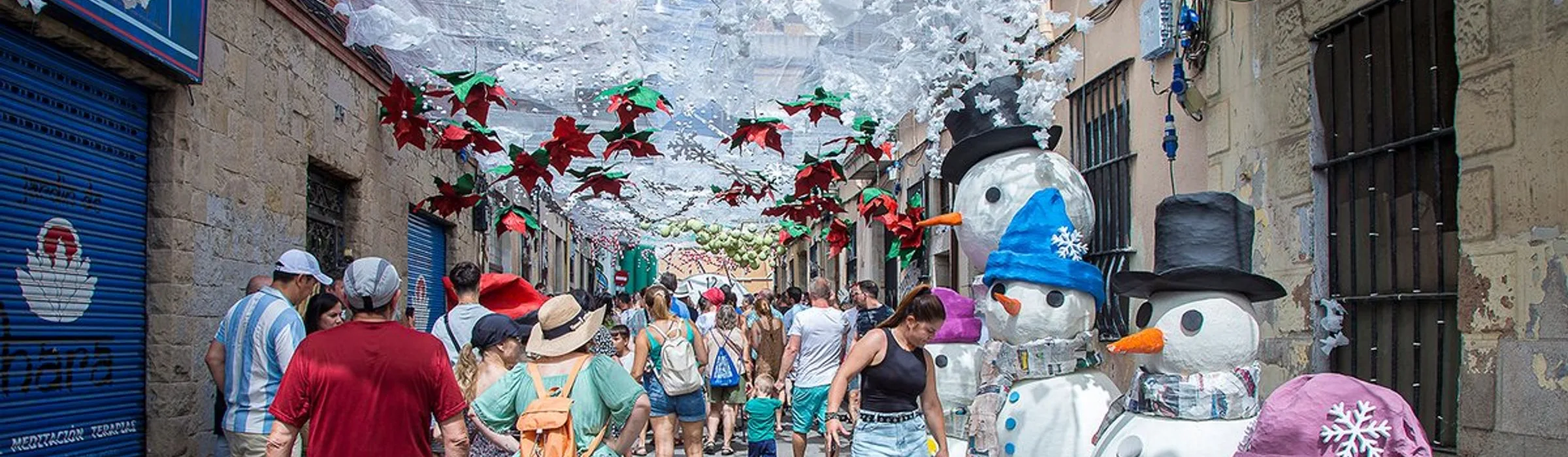
Every barri in Barcelona throws its own festa major — a week of free street parties that are some of the most magical (and most local) things you can do with kids in the city. Expect gegants (towering papier-mâché giants that parade and dance), castellers building human towers, capgrossos (big-heads) chasing children through the crowd, sardana circles, open-air concerts and the famous correfocs, where costumed 'devils' run through the streets trailing showers of sparks.
The season runs from summer well into winter, hopping from neighborhood to neighborhood: Raval kicks things off in July, then Gràcia (mid-August) and Sants turn their streets into wildly decorated, themed wonderlands competing for a prize, before Poblenou, Horta, Barceloneta, Sarrià and finally Sant Andreu carry the festivities through to December.
Almost everything is free and outdoors, with daytime giant parades, workshops and children's activities that suit even little ones. One tip for the correfocs: they're loud and genuinely sparky, so dress in cotton (no synthetics), wear a hat and a long-sleeve top, and watch the family-friendly 'correfoc infantil' if your kids are small. This collection gathers this year's neighborhood festes majors so you can plan which streets to wander into next.

On the map
8 spots on the map
What’s in this collection
The Raval Festival transforms the neighborhood's streets, plazas, and cultural venues into a four-day program featuring concerts, giant parades, flamenco performances, correfocs (fire and pyrotechnics shows), guided museum tours, family workshops, cinema screenings, drum routes, habaneres singing, and casteller human towers. Activities center on La Rambla del Raval and extend throughout El Raval, with community dinners and free guided visits at the Liceu, CCCB, MACBA, and Filmoteca.
Barcelona's most famous neighbourhood festival runs August 15–21, 2026, across decorated streets in Gràcia. Residents build elaborate themed street decorations competing for best-decorated prizes, ranging from underwater worlds to historical recreations. The program includes free daytime kids' activities, gegants parades, and a Correfoc Infantil (child-scale fire run). Weekday afternoons are less crowded than weekend evenings.
Festa Major de Sants runs August 22–30 with decorated streets, gegants parades, castellers building human towers, and kids' programming. The festival features floral offerings, sardana dances, stick dancing exhibitions, community meals, and a closing correfoc fire run. Around 11 streets and squares compete for decoration prizes, with a smaller, locally-focused atmosphere than neighboring Gràcia.
Festa Major d'Horta is a ten-day September festival honoring Sant Gaudenci, featuring pilars de caixes (human towers built on stacked crates), a closing correfoc fire run, gegants parades, live concerts, and kids' activities. The tradition dates back to 1731 and is organized by local community groups in the Horta neighborhood.
Poblenou's September neighbourhood festival features strong kids' programming including gegants (giant figures), castellers (human towers), and a closing correfoc (fire run). Run by the Coordinadora d'Entitats del Poblenou, the event takes a family-friendly approach with a more accessible tone than similar festivals in the city.
The Barceloneta neighbourhood festival runs with traditional sardanes dancing, havaneres singing on the beach, a parade led by local giants Pep Barceló and Maria la Néta, and the signature cannon parade that fires sweets to the crowd. A correfoc with fire-flaring diables and decorated streets round out a programme honouring Sant Miquel on 29 September, with a distinctly local, seaside atmosphere rooted in the neighbourhood's fishing and seafaring heritage.
Festa Major de Sarrià honors the Virgin of the Rosary with decorated façades, giants parades, human towers, and sardanes across October 2–12. The program includes the Correfoc, a pyrotechnic spectacle where devils parade through streets with fire effects, alongside traditional Catalan performances and street activities rooted in neighborhood traditions.
Sant Andreu's year-end festival fills the streets of Sant Andreu de Palomar with fire runs, traditional Catalan music, and giant parades over roughly ten days. The district's major celebration closes Barcelona's festa major calendar that opens with Sant Antoni in January, drawing families for the correfoc, the season's last giant parade, and lively street performances around Placa d'Orfila.