

Gaudí may be the most famous architect in Barcelona's history, but he's certainly not the only great one. Check out these lesser-known but still incredible sites.
On the map
8 spots on the map
What’s in this collection
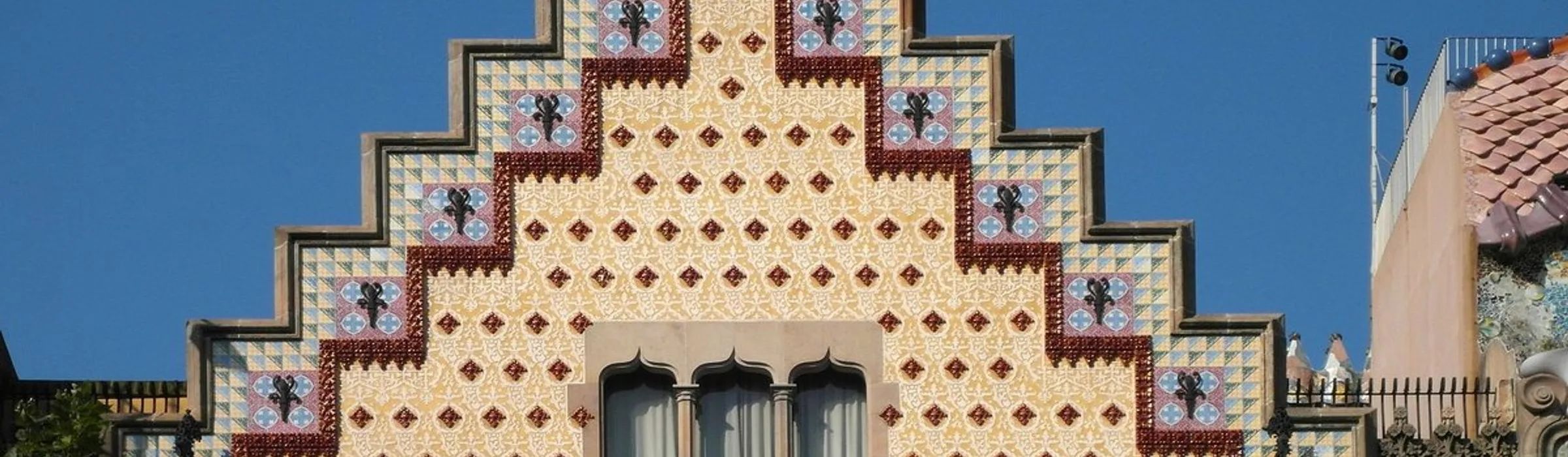
The house next to Casa Batlló belonged to chocolate maker Antoni Amatller. Josep Puig i Cadafalch rebuilt it for him in 1898, topping it with a stepped gable and filling the doorway with carved animals pouring chocolate and taking photos. The main floor keeps its original furniture, audio-guided visits leave every 30 minutes, and the basement shop pours hot chocolate to the family recipe.
A Modernisme concert hall by Domènech i Montaner, crowned by an inverted stained-glass dome that makes it the only major European hall lit entirely by daylight. The 50-minute guided tour, offered daily in English, takes in the rehearsal room and the glass-wrapped main hall. The Palau also runs occasional family tours with a hands-on workshop and weekend Concerts en Família for children.
Designed by Lluis Domenech i Montaner and built between 1902 and 1930, this UNESCO-listed site is the world's largest Art Nouveau complex: 12 restored pavilions covered in colored tile, sculpture, and stained glass, set among open gardens and linked by long underground tunnels kids can walk through. Self-guided routes pass mosaic murals, domed ceilings, and a scale model of the campus.
Mies van der Rohe built this pavilion for Germany at the 1929 International Exposition; it was demolished after the fair and rebuilt stone by stone in 1986. There are no rooms to queue through: kids roam freely between floating marble walls, spot the bronze statue in the small pool, and watch reflections shift across the water and green glass. A visit takes 20 to 30 minutes, and the Fundació runs occasional family workshops.
Josep Vilaseca built this red-brick arch as the grand entrance to the 1888 Universal Exposition, decorating it with ceramic crowns, carved friezes, and a squadron of stone bats. It presides over Passeig de Lluís Companys, a wide car-free promenade lined with palm trees where kids scoot and bike past giant-bubble makers and street musicians, and it dead-ends into Parc de la Ciutadella, so it slots naturally into a park morning.
A covered market on the site of Barcelona's oldest food hall, rebuilt in 2005 under a wavy roof tiled with 325,000 hexagonal ceramics in bright colors. Inside are around 100 stalls of fish, meat, fruit, and bread, plus a handful of tapas and restaurant counters where you can sit down to eat. It stays calmer and more local than La Boqueria.
Experience Barcelona from 125 meters up at Torre Glòries, the city's third-tallest building. The visit starts underground in an interactive museum of cutting-edge technology and a floating art installation, then takes you up by elevator to the 30th-floor lookout for complete 360-degree views — from the Mediterranean to the Sagrada Família to Montjuïc. Thanks to the tower's circular shape, the panorama is uninterrupted. If you're up for it, add the Cloud Cities Barcelona experience, a walk-through floating artwork by Tomás Saraceno (extra cost, with physical requirements). A digital audio guide in 10 languages helps keep kids engaged.
This palace has two different faces: a Gothic-style front crusted with gargoyles on Avinguda Diagonal and a curvy Modernista apartment block behind. Josep Puig i Cadafalch, the architect of Casa Amatller, rebuilt it in 1904 for the Baró de Quadras, and sculptor Eusebi Arnau packed the facade with dragons, knights, and improbable beasts that make a great spotting game. Now the Institut Ramon Llull's headquarters, it opens for 50-minute guided tours on Fridays.

