
An exhibition exploring time through its origins, measurement systems, and how humans perceive it. Interactive displays and reflective installations invite visitors to think about how we experience time and how science keeps it.

Ciutat Vella packs more into walking distance than any other district: the city's best cluster of kid-friendly museums, hidden squares with playgrounds and terraces, the Barceloneta beachfront, and a steady run of street festivals. Narrow streets make strollers hard work, so it rewards a plan built around a few stops rather than a long wander.
An exhibition exploring time through its origins, measurement systems, and how humans perceive it. Interactive displays and reflective installations invite visitors to think about how we experience time and how science keeps it.
Patis Oberts opens school playgrounds to everyone outside class time, so the yard down the street becomes a neighborhood play space. A monitor opens the gate, watches over the space and gets kids playing together.
The 20 city nursery schools in the program set out sandboxes and toddler play areas for the under-sixes, and several host a storytime during the season.
In this family workshop, kids and adults search the Barcelona Flashback exhibition for five missing objects using a clue game. The route turns more than 2,000 years of city history into a shared puzzle, with stops around housing, food supply, work, urban planning, and everyday life across the exhibition rooms.
A family rock concert with a real band on stage. Big Mouthers, a Catalan covers band, plays AC/DC, Queen, Ramones and Green Day, plus Spanish rock from Fito, Barricada and Loquillo. Between songs, Rosendo the bear and a cast of puppets tell funny stories about the bands, and there are games and surprises along the way.
Kids spend the night beside the tanks, surrounded by sharks, rays, moray eels and other species, and learn what sharks are like, how they breed and what they do after dark. The night includes a guided tour of the main exhibits, a game called Shark Investigators, and a tour of the aquarium's technical area. Civil liability insurance is included.
Every autumn the Castanyera comes down from the mountain to roast chestnuts in the city square. This year the kids only want Halloween costumes and candy, so she decides it's time to reinvent herself, and not every idea goes to plan.
It's a gentle way into the two traditions that share October 31. Costumed characters, including a pumpkin-headed Jack, help kids still learning Catalan follow along.
Families explore the Barcelona Shipyards' construction techniques by building stone arches using ancient methods, then create personalized stonemason marks from clay to take home. Part of the "Royal Shipyards: stones that tell Barcelona" program developed for Barcelona's UNESCO-UIA World Capital of Architecture 2026 designation.
Kids build stone arches the way medieval masons did, inside the Royal Shipyards that house the Maritime Museum. Then they carve their own stonemason's mark in clay and take it home. The workshop is part of the museum's Drassanes Reials program for Barcelona's 2026 year as World Capital of Architecture.
Castaween is the Museu de la Xocolata's mix of the Castanyada and Halloween. In its family workshops, kids and parents work side by side, piping melted chocolate into spiderwebs, witch hats and pumpkin faces, or decorating butter cookies with ghosts and bats.
One workshop, Xoco Trencadís, adds a bit of Barcelona history: kids build a broken-tile mosaic, the style Gaudí made famous, out of colored chocolate.
Shopkeepers in neighborhoods all over Barcelona turn their streets into trick-or-treat routes for Halloween and the Castanyada. Kids in costume go from shop to shop, look for the sign in the window, and ask for candy.
The map shows every route found, each with its time. Some still show last year's times, since most shop associations post theirs in mid-October.
Kids in costume go from shop to shop through Barceloneta asking for candy, handed out by the storekeepers themselves. The shopkeepers' association puts it on with the neighborhood's school parent groups and local festival committee.
Every fall, roasted chestnut stands pop up on street corners all over Barcelona. A warm paper cone of chestnuts, or a roasted sweet potato, on the walk home is the easiest way to do the Castanyada with kids.
The pins show the 2025 stands, because the 2026 list is not out yet. The city usually posts it in late October, and most stands return to the same corner.
This version of the classic Christmas ballet keeps Tchaikovsky's famous melodies but hands them to a live jazz band, so kids hear tunes they may already know played as jazz.
Instead of tutus, a big cast of dancers in bright, playful costumes tells the story through contemporary dance. It plays in the Liceu's main hall, so it doubles as a first look inside Barcelona's grand red-and-gold opera house.
Every Christmas the old harbor turns into a waterfront fair: wooden stalls and lights along Moll de la Fusta, a 65-meter Ferris wheel turning over the boats, and a synthetic ice rink.
What sets it apart from the city's other fairs is the sea. Historic ships open their decks, and younger kids head for the old-fashioned carousel and the Christmas train, with Santa waving from the front car.
Beyond the big fair by the cathedral, almost every Barcelona neighborhood puts on its own Christmas fair, run by local shopkeepers and residents. The stalls are smaller and friendlier, often with a Caga Tió for kids to beat, hot chocolate, and a royal page collecting letters.
For little kids there are also Christmas trains, small road trains that loop through the neighborhood past the lights.
In Spain, the new year starts with 12 grapes, one for each chime of the clock at midnight. Midnight is late for small kids, so several spots around the city hold kids' countdowns at noon instead.
These midday parties bring music, dancing and a big countdown, with grapes or other treats handed around. Kids feel part of the biggest night of the year and are still in bed on time.
The Three Kings arrive by boat at Portal de la Pau, near the Columbus monument, then ride through the city on floats with musicians, dancers and acrobats. Children hand wish lists to royal pages while helpers throw sweets into the crowd. Floats are themed around toys, bicycles and African instruments, with routines by local dance companies.
Every Christmas a big top goes up on the Moll de la Fusta, and the Raluys, a Catalan circus family, put on a new show. Think trapeze, aerial silks, acrobats flying off a seesaw, contortionists, a clown and live music, close enough to see the performers' faces.
There are no animal acts and very little talking, so it works for kids in any language.
Around Christmas, Barcelona fills with pessebres, the Catalan nativity scenes: whole miniature villages of moss, rivers, mills and shepherds built around the manger. City Hall, the Cathedral, markets and neighborhood clubs each build one.
The game every local kid knows is spotting the caganer, a little squatting figure hidden in almost every one. In the Cathedral cloister, kids also count the 13 white geese that live there.
Day of the Dead (Día de Muertos) is the Mexican holiday when families remember relatives who have died, with flower-covered altars, candles and sugar skulls. It is about memory, not a scary night.
The Mexican cultural association MEXCAT marks it here with a parade of catrinas, elegant skeleton ladies in big flowered hats, down La Rambla toward the sea. The painted faces are worth seeing up close.
The whole city turns out to welcome the Three Kings. Melcior, Gaspar and Baltasar sail into the old port, then ride across the center on giant lit-up floats with dancers, stilt walkers, live music and a crowd of patges, their royal helpers.
Kids catch the candy thrown from the floats, wave at their favorite king and look out for Page Estel with her star.
A Michael Jackson tribute concert. Impersonator SacMjj recreates his best-known choreographies while Dabeat sings the hits live. It suits kids who like to get up and dance, and parents who grew up on Thriller often enjoy it as much as the kids do.
Catalan kids grow up with a New Year's riddle: on December 31 you can meet the Home dels Nassos, the man with as many noses as there are days left in the year. The joke is that on the last day he has only one.
The city's version is a big-headed capgròs figure who parades with musicians and hands over the key that opens the new year.
Barcelona hangs lights over its main streets and squares each winter, and the big designer pieces change every year, so the walk looks different each time.
Kids usually stop longest at the moving pieces: the projection that turns City Hall into a giant Christmas card on Plaça de Sant Jaume, and the short light and music show on Gaudí's Casa Batlló.
This is a concert, not a ballet. An orchestra plays the best-known parts of Tchaikovsky's Nutcracker while a narrator tells the story, and a sand artist draws it live on a table, projected on a big screen.
The room is half the show. The Palau de la Música is covered in colored glass and mosaics, and kids spend as much time looking up at the ceiling as at the stage.
In the days before January 5, kids hand their wish list in person to a patge reial, one of the Three Kings' royal pages, often with a quick chat about how good they have been all year.
The pages set up in markets, squares and little royal tents all over the city. Tradition says naughty kids get a lump of carbó, coal, these days a sugary version from the bakery.
At Christmas the Zoo adds a festive layer to a day with the animals: a 12-meter fir tree by the Lady with the Umbrella fountain and winter photo spots along the paths.
The program leans on Catalan traditions. La Casa dels Tions shows how the Tió looks after the forest, families can join a group Caga Tió, and a scavenger hunt sends kids around the zoo with wildlife clues.
Barcelona has no frozen ponds, so skating here means the rinks that pop up for Christmas. The biggest is the real-ice rink at Westfield La Maquinista, with a Christmas market and a giant slide next to it.
Some rinks are real ice and some are synthetic panels, which feel slower underfoot.
Since 1786, the square in front of Barcelona Cathedral has filled with Christmas stalls around the feast of Santa Llúcia on December 13. Families come to shop for their nativity scene: tiny clay figures, moss, cork mountains and the caganer.
It is also where locals buy their Caga Tió, and a giant Tió in front of the cathedral lets kids try beating it for themselves.
A century-old swim club on Sant Sebastià beach with direct access to the sand, plus a dedicated learn-to-swim pool. The pools are also listed as Piscina Sant Sebastià; it is the same place. Beyond the water there are padel courts, a gym, a spa, a poolside restaurant and a summer sports camp.
Less than 200 meters off the Rambla, this is one of the old city's calmest corners: traffic-free, tree-shaded, and built around a 2025-renovated, fence-free play area set right into the square. Three small bar-restaurants line the arcades, so parents can sit with a coffee while kids move between the climbing frames and slides a few steps away.
Port Vell's aquarium holds 11,000 animals from 450 species across 35 tanks. The centerpiece is an 80-meter glass tunnel that runs through the Oceanarium, where sandbar and sand tiger sharks, rays, and a giant sunfish swim overhead. The Explora! zone adds 50-plus hands-on stations and touch pools with starfish, sea urchins, and crabs.
Barcelona's zoo fills a large green stretch of Parc de la Ciutadella. For many families the draw is as much the playground as the animals, which is why locals often come with other families and build a whole morning around it. There is a small farm zone where younger kids meet goats and ponies.
Set in the 14th-century former Convent de Sant Agustí, the collection is built around sculptures made entirely of chocolate: the Sagrada Família, Sant Jordi and the dragon, and cartoon characters that change through the year. Panels trace cocoa from bean to bar, and the cafe and obrador run hands-on workshops and tastings.
A working candy and chocolate factory where kids spend 90 minutes making their own pieces alongside an artisan. They mold two or three items using screen prints of leaves, animals and letters, plus marshmallows, wooden-toy molds and a treasure box, then package everything to take home. An open family workshop runs every Saturday morning, and private groups book the room for birthdays.
Maremagnum sits on its own island in Port Vell, reached by the Rambla de Mar wooden swing bridge from the Columbus Monument. Two floors of shops and a food court wrap around an indoor atrium, with a free children's play area, an information point, and a first-aid room. Waterside terraces look out over the marina, and L'Aquarium is next door.
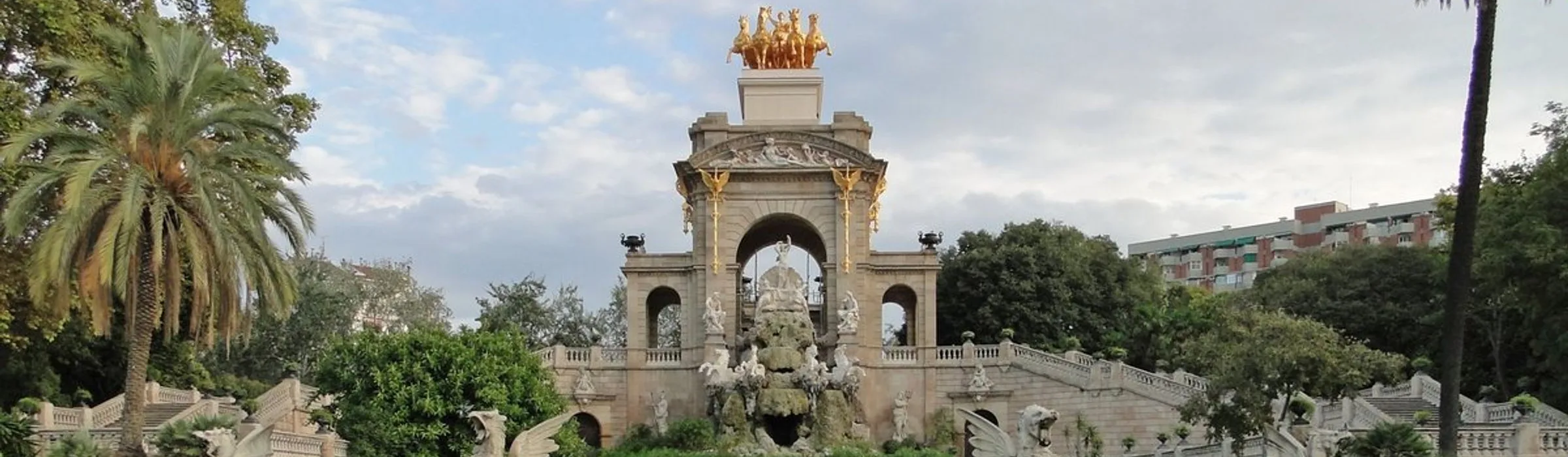
Parc de la Ciutadella covers 17 hectares of flat, shaded paths around a rowing-boat lake. Kids can climb the life-size stone mammoth, explore the monumental Cascada fountain (a young Gaudí helped design it), and visit the Castell dels Tres Dragons. Several playgrounds are dotted through the grounds, and Barcelona Zoo occupies the southern half. Open daily, 7am to dusk.
Barcelona's biggest public market sits just off La Rambla under an iron-and-glass roof from 1914, with the stained-glass Sant Josep sign over the entrance. Stalls sell fruit, fish, jamón, cheese, and sweets, and small bar counters cook tapas to order. Kids gravitate to the rainbow fruit-cup and fresh-juice stands near the front.
A wide, car-free square tucked between El Born and the Sant Pere neighborhood, with a playground at its center and bar terraces along the edges. Billy Brunch's outdoor tables look straight onto the play area. There is a small community garden along one side. It is a local, lived-in spot, away from the busier tourist streets.
Known locally as 'la plaça del Tripi' for the surrealist Leandre Cristòfol sculpture at its apex, this triangular square near Plaça Reial is ringed by bars and restaurants with terrace seating. A small circular fenced playground in one corner suits toddlers and young children, and buskers and steady foot traffic keep it busy. It is grittier and louder than the Gràcia squares.
Tucked behind Barcelona's City Hall, Plaça de Sant Miquel is one of the quietest squares in the old city. Its playground has in-ground trampolines set right at the base of Antoni Llena's 26.5-meter Homenatge als Castellers, a stainless-steel tower shaped like the wire cage over a cava cork. The square is car-free, with a couple of bars for a coffee while kids play.
A wide stretch of sand running about 400 meters along the Passeig Marítim promenade, with the W Hotel sail at one end and the Port Olímpic towers at the other. There are lifeguards and showers in summer, sun loungers and chiringuito snack bars to rent from, volleyball nets, and an outdoor gym. Calm shallows make it easy for kids to paddle.
Beneath Plaça del Rei lies the largest underground excavation of Roman Barcino, over 4,000 square meters of 1st-to-7th-century streets, city wall, a laundry, a dyeing workshop, a fish-salting plant and a winery, crossed on raised walkways. The route then climbs into the medieval Saló del Tinell hall and Santa Àgata chapel of the old royal palace.
The city's grand iron market hall, built in 1876, was being turned into a library when workers found an entire block of 1700s Barcelona under the floor: streets, houses, shops and drains, left where they stood after the siege of 1714. The view over the excavation lands even with kids because it looks exactly like what it is, a buried little city. Santa Maria del Mar is three minutes away.
A large neighborhood square on the edge of the Raval, reorganized in 2017 around a children's play area with two zones: gentler equipment for under-5s and a more challenging structure for older kids. Beyond the playground there is a basketball court, petanque courts and plenty of benches for parents. The paved areas catch full sun, so mornings are the most comfortable time to visit.
A covered market on the site of Barcelona's oldest food hall, rebuilt in 2005 under a wavy roof tiled with 325,000 hexagonal ceramics in bright colors. Inside are around 100 stalls of fish, meat, fruit, and bread, plus a handful of tapas and restaurant counters where you can sit down to eat. It stays calmer and more local than La Boqueria.
The family strand of the city's public film archive screens a film every Saturday and Sunday at 5pm in a proper air-conditioned cinema. The program changes quarterly around a theme, with recent cycles on Studio Ghibli and Japanese animation alongside classics. Films run in their original version with Catalan or Spanish subtitles rather than English dubbing, which suits animation well.
La Casa dels Entremesos fills the old Palau Mercaders with Barcelona's festival imagery: the giants, capgrossos, and bestiary that parade through Ciutat Vella during festes majors live here between outings. Kids can walk right up to the figures, catch a roughly monthly Saturday-morning puppet show, or join the theatrical tour of the giants held the first Sunday of each month.
At the chocolate museum in El Born, the family workshop puts a piping bag in your child's hands: kids melt, pipe and mold chocolate into lollipops or bars and decorate them before tasting the results. A short, kid-friendly explanation of how chocolate is made opens each hour-long session. Every ticket also includes museum entry, home to chocolate sculptures and the edible chocolate-bar admission ticket.
A Modernisme concert hall by Domènech i Montaner, crowned by an inverted stained-glass dome that makes it the only major European hall lit entirely by daylight. The 50-minute guided tour, offered daily in English, takes in the rehearsal room and the glass-wrapped main hall. The Palau also runs occasional family tours with a hands-on workshop and weekend Concerts en Família for children.
An early Antoni Gaudí mansion, built 1886 to 1888 for the Güell family. The tour runs from a brick-columned basement stable, where carriage horses were kept, up to a central hall topped by a dome pierced with small holes that let light fall like stars. The flat roof is set with cone chimneys covered in broken-tile mosaic.
Josep Vilaseca built this red-brick arch as the grand entrance to the 1888 Universal Exposition, decorating it with ceramic crowns, carved friezes, and a squadron of stone bats. It presides over Passeig de Lluís Companys, a wide car-free promenade lined with palm trees where kids scoot and bike past giant-bubble makers and street musicians, and it dead-ends into Parc de la Ciutadella, so it slots naturally into a park morning.
The pailebote Santa Eulàlia is a restored 1918 schooner moored at the Moll de la Fusta in Port Vell, part of the Maritime Museum's collection. Visitors board to explore its design, period furnishings and rigging, and learn how sailors lived during long Mediterranean voyages. It is one of the oldest working sailing ships in the Mediterranean.
Esperança ("hope" in Catalan) is a volunteer-run charity that has fed the city's homeless community since 2013. On weekend evenings, small teams walk set routes through the old city, handing out homemade soup and sandwiches to around 150 people, all donated and prepared by volunteers. Families with teenagers can join a walk, prep food at home, or donate clothing.
A small pedestrian square in front of the Gothic basilica of Santa Maria del Pi, shaded by a pine that has stood here for centuries. There are no swings, but the flat traffic-free paving lets toddlers run while parents sit at a café terrace, and most weekends an artisan food market fills the space. Pair it with the chocolate shops on nearby Carrer Petritxol.
Las Golondrinas has run harbor boat tours from the foot of the Columbus Monument since 1888. The 40-minute harbor tour loops around the port breakwater; the 90-minute coastal tour heads up to Port Olímpic via a glass-bottom boat with underwater views of the seabed. Boats depart from the Moll de les Drassanes jetty, a 4-minute walk from Drassanes metro.
A pair of red cabins that glide 70 meters above the old harbor between the Barceloneta tower and Montjuïc, running since the 1929 International Exposition. The ten-minute crossing gives some of the best aerial views over the marina, the beaches and the sea. Cabins are standing-room only and hold 19, and with just two of them queues build quickly at weekends.
The museum fills the Drassanes Reials, the Gothic shipyards where medieval war galleys were built, and its centerpiece is a full-size replica of the 1571 Royal Galley, 60 meters of red hull and gilded stern under the stone arches. Around it sit ship models, figureheads, a wooden submarine replica in the garden, and the 1918 schooner Santa Eulàlia docked nearby at Moll de la Fusta.
A 420-meter stretch of sand between Sant Sebastià and Barceloneta beaches, named after the 1755 church of Sant Miquel del Port. The shallow, gently shelving entry suits younger swimmers, and lifeguards watch the water in summer. Showers, adapted toilets, and wooden walkways run down to the waterline, with ice-cream kiosks and paddle-surf rentals along the promenade.
Ciutat Vella packs more into walking distance than any other district: the city's best cluster of kid-friendly museums, hidden squares with playgrounds and terraces, the Barceloneta beachfront, and a steady run of street festivals. Narrow streets make strollers hard work, so it rewards a plan built around a few stops rather than a long wander.
An exhibition exploring time through its origins, measurement systems, and how humans perceive it. Interactive displays and reflective installations invite visitors to think about how we experience time and how science keeps it.
Patis Oberts opens school playgrounds to everyone outside class time, so the yard down the street becomes a neighborhood play space. A monitor opens the gate, watches over the space and gets kids playing together.
The 20 city nursery schools in the program set out sandboxes and toddler play areas for the under-sixes, and several host a storytime during the season.
In this family workshop, kids and adults search the Barcelona Flashback exhibition for five missing objects using a clue game. The route turns more than 2,000 years of city history into a shared puzzle, with stops around housing, food supply, work, urban planning, and everyday life across the exhibition rooms.
A family rock concert with a real band on stage. Big Mouthers, a Catalan covers band, plays AC/DC, Queen, Ramones and Green Day, plus Spanish rock from Fito, Barricada and Loquillo. Between songs, Rosendo the bear and a cast of puppets tell funny stories about the bands, and there are games and surprises along the way.
Kids spend the night beside the tanks, surrounded by sharks, rays, moray eels and other species, and learn what sharks are like, how they breed and what they do after dark. The night includes a guided tour of the main exhibits, a game called Shark Investigators, and a tour of the aquarium's technical area. Civil liability insurance is included.
Every autumn the Castanyera comes down from the mountain to roast chestnuts in the city square. This year the kids only want Halloween costumes and candy, so she decides it's time to reinvent herself, and not every idea goes to plan.
It's a gentle way into the two traditions that share October 31. Costumed characters, including a pumpkin-headed Jack, help kids still learning Catalan follow along.
Families explore the Barcelona Shipyards' construction techniques by building stone arches using ancient methods, then create personalized stonemason marks from clay to take home. Part of the "Royal Shipyards: stones that tell Barcelona" program developed for Barcelona's UNESCO-UIA World Capital of Architecture 2026 designation.
Kids build stone arches the way medieval masons did, inside the Royal Shipyards that house the Maritime Museum. Then they carve their own stonemason's mark in clay and take it home. The workshop is part of the museum's Drassanes Reials program for Barcelona's 2026 year as World Capital of Architecture.
Castaween is the Museu de la Xocolata's mix of the Castanyada and Halloween. In its family workshops, kids and parents work side by side, piping melted chocolate into spiderwebs, witch hats and pumpkin faces, or decorating butter cookies with ghosts and bats.
One workshop, Xoco Trencadís, adds a bit of Barcelona history: kids build a broken-tile mosaic, the style Gaudí made famous, out of colored chocolate.
Shopkeepers in neighborhoods all over Barcelona turn their streets into trick-or-treat routes for Halloween and the Castanyada. Kids in costume go from shop to shop, look for the sign in the window, and ask for candy.
The map shows every route found, each with its time. Some still show last year's times, since most shop associations post theirs in mid-October.
Kids in costume go from shop to shop through Barceloneta asking for candy, handed out by the storekeepers themselves. The shopkeepers' association puts it on with the neighborhood's school parent groups and local festival committee.
Every fall, roasted chestnut stands pop up on street corners all over Barcelona. A warm paper cone of chestnuts, or a roasted sweet potato, on the walk home is the easiest way to do the Castanyada with kids.
The pins show the 2025 stands, because the 2026 list is not out yet. The city usually posts it in late October, and most stands return to the same corner.
This version of the classic Christmas ballet keeps Tchaikovsky's famous melodies but hands them to a live jazz band, so kids hear tunes they may already know played as jazz.
Instead of tutus, a big cast of dancers in bright, playful costumes tells the story through contemporary dance. It plays in the Liceu's main hall, so it doubles as a first look inside Barcelona's grand red-and-gold opera house.
Every Christmas the old harbor turns into a waterfront fair: wooden stalls and lights along Moll de la Fusta, a 65-meter Ferris wheel turning over the boats, and a synthetic ice rink.
What sets it apart from the city's other fairs is the sea. Historic ships open their decks, and younger kids head for the old-fashioned carousel and the Christmas train, with Santa waving from the front car.
Beyond the big fair by the cathedral, almost every Barcelona neighborhood puts on its own Christmas fair, run by local shopkeepers and residents. The stalls are smaller and friendlier, often with a Caga Tió for kids to beat, hot chocolate, and a royal page collecting letters.
For little kids there are also Christmas trains, small road trains that loop through the neighborhood past the lights.
In Spain, the new year starts with 12 grapes, one for each chime of the clock at midnight. Midnight is late for small kids, so several spots around the city hold kids' countdowns at noon instead.
These midday parties bring music, dancing and a big countdown, with grapes or other treats handed around. Kids feel part of the biggest night of the year and are still in bed on time.
The Three Kings arrive by boat at Portal de la Pau, near the Columbus monument, then ride through the city on floats with musicians, dancers and acrobats. Children hand wish lists to royal pages while helpers throw sweets into the crowd. Floats are themed around toys, bicycles and African instruments, with routines by local dance companies.
Every Christmas a big top goes up on the Moll de la Fusta, and the Raluys, a Catalan circus family, put on a new show. Think trapeze, aerial silks, acrobats flying off a seesaw, contortionists, a clown and live music, close enough to see the performers' faces.
There are no animal acts and very little talking, so it works for kids in any language.
Around Christmas, Barcelona fills with pessebres, the Catalan nativity scenes: whole miniature villages of moss, rivers, mills and shepherds built around the manger. City Hall, the Cathedral, markets and neighborhood clubs each build one.
The game every local kid knows is spotting the caganer, a little squatting figure hidden in almost every one. In the Cathedral cloister, kids also count the 13 white geese that live there.
Day of the Dead (Día de Muertos) is the Mexican holiday when families remember relatives who have died, with flower-covered altars, candles and sugar skulls. It is about memory, not a scary night.
The Mexican cultural association MEXCAT marks it here with a parade of catrinas, elegant skeleton ladies in big flowered hats, down La Rambla toward the sea. The painted faces are worth seeing up close.
The whole city turns out to welcome the Three Kings. Melcior, Gaspar and Baltasar sail into the old port, then ride across the center on giant lit-up floats with dancers, stilt walkers, live music and a crowd of patges, their royal helpers.
Kids catch the candy thrown from the floats, wave at their favorite king and look out for Page Estel with her star.
A Michael Jackson tribute concert. Impersonator SacMjj recreates his best-known choreographies while Dabeat sings the hits live. It suits kids who like to get up and dance, and parents who grew up on Thriller often enjoy it as much as the kids do.
Catalan kids grow up with a New Year's riddle: on December 31 you can meet the Home dels Nassos, the man with as many noses as there are days left in the year. The joke is that on the last day he has only one.
The city's version is a big-headed capgròs figure who parades with musicians and hands over the key that opens the new year.
Barcelona hangs lights over its main streets and squares each winter, and the big designer pieces change every year, so the walk looks different each time.
Kids usually stop longest at the moving pieces: the projection that turns City Hall into a giant Christmas card on Plaça de Sant Jaume, and the short light and music show on Gaudí's Casa Batlló.
This is a concert, not a ballet. An orchestra plays the best-known parts of Tchaikovsky's Nutcracker while a narrator tells the story, and a sand artist draws it live on a table, projected on a big screen.
The room is half the show. The Palau de la Música is covered in colored glass and mosaics, and kids spend as much time looking up at the ceiling as at the stage.
In the days before January 5, kids hand their wish list in person to a patge reial, one of the Three Kings' royal pages, often with a quick chat about how good they have been all year.
The pages set up in markets, squares and little royal tents all over the city. Tradition says naughty kids get a lump of carbó, coal, these days a sugary version from the bakery.
At Christmas the Zoo adds a festive layer to a day with the animals: a 12-meter fir tree by the Lady with the Umbrella fountain and winter photo spots along the paths.
The program leans on Catalan traditions. La Casa dels Tions shows how the Tió looks after the forest, families can join a group Caga Tió, and a scavenger hunt sends kids around the zoo with wildlife clues.
Barcelona has no frozen ponds, so skating here means the rinks that pop up for Christmas. The biggest is the real-ice rink at Westfield La Maquinista, with a Christmas market and a giant slide next to it.
Some rinks are real ice and some are synthetic panels, which feel slower underfoot.
Since 1786, the square in front of Barcelona Cathedral has filled with Christmas stalls around the feast of Santa Llúcia on December 13. Families come to shop for their nativity scene: tiny clay figures, moss, cork mountains and the caganer.
It is also where locals buy their Caga Tió, and a giant Tió in front of the cathedral lets kids try beating it for themselves.
A century-old swim club on Sant Sebastià beach with direct access to the sand, plus a dedicated learn-to-swim pool. The pools are also listed as Piscina Sant Sebastià; it is the same place. Beyond the water there are padel courts, a gym, a spa, a poolside restaurant and a summer sports camp.
Less than 200 meters off the Rambla, this is one of the old city's calmest corners: traffic-free, tree-shaded, and built around a 2025-renovated, fence-free play area set right into the square. Three small bar-restaurants line the arcades, so parents can sit with a coffee while kids move between the climbing frames and slides a few steps away.
Port Vell's aquarium holds 11,000 animals from 450 species across 35 tanks. The centerpiece is an 80-meter glass tunnel that runs through the Oceanarium, where sandbar and sand tiger sharks, rays, and a giant sunfish swim overhead. The Explora! zone adds 50-plus hands-on stations and touch pools with starfish, sea urchins, and crabs.
Barcelona's zoo fills a large green stretch of Parc de la Ciutadella. For many families the draw is as much the playground as the animals, which is why locals often come with other families and build a whole morning around it. There is a small farm zone where younger kids meet goats and ponies.
Set in the 14th-century former Convent de Sant Agustí, the collection is built around sculptures made entirely of chocolate: the Sagrada Família, Sant Jordi and the dragon, and cartoon characters that change through the year. Panels trace cocoa from bean to bar, and the cafe and obrador run hands-on workshops and tastings.
A working candy and chocolate factory where kids spend 90 minutes making their own pieces alongside an artisan. They mold two or three items using screen prints of leaves, animals and letters, plus marshmallows, wooden-toy molds and a treasure box, then package everything to take home. An open family workshop runs every Saturday morning, and private groups book the room for birthdays.
Maremagnum sits on its own island in Port Vell, reached by the Rambla de Mar wooden swing bridge from the Columbus Monument. Two floors of shops and a food court wrap around an indoor atrium, with a free children's play area, an information point, and a first-aid room. Waterside terraces look out over the marina, and L'Aquarium is next door.
Parc de la Ciutadella covers 17 hectares of flat, shaded paths around a rowing-boat lake. Kids can climb the life-size stone mammoth, explore the monumental Cascada fountain (a young Gaudí helped design it), and visit the Castell dels Tres Dragons. Several playgrounds are dotted through the grounds, and Barcelona Zoo occupies the southern half. Open daily, 7am to dusk.
Barcelona's biggest public market sits just off La Rambla under an iron-and-glass roof from 1914, with the stained-glass Sant Josep sign over the entrance. Stalls sell fruit, fish, jamón, cheese, and sweets, and small bar counters cook tapas to order. Kids gravitate to the rainbow fruit-cup and fresh-juice stands near the front.
A wide, car-free square tucked between El Born and the Sant Pere neighborhood, with a playground at its center and bar terraces along the edges. Billy Brunch's outdoor tables look straight onto the play area. There is a small community garden along one side. It is a local, lived-in spot, away from the busier tourist streets.
Known locally as 'la plaça del Tripi' for the surrealist Leandre Cristòfol sculpture at its apex, this triangular square near Plaça Reial is ringed by bars and restaurants with terrace seating. A small circular fenced playground in one corner suits toddlers and young children, and buskers and steady foot traffic keep it busy. It is grittier and louder than the Gràcia squares.
Tucked behind Barcelona's City Hall, Plaça de Sant Miquel is one of the quietest squares in the old city. Its playground has in-ground trampolines set right at the base of Antoni Llena's 26.5-meter Homenatge als Castellers, a stainless-steel tower shaped like the wire cage over a cava cork. The square is car-free, with a couple of bars for a coffee while kids play.
A wide stretch of sand running about 400 meters along the Passeig Marítim promenade, with the W Hotel sail at one end and the Port Olímpic towers at the other. There are lifeguards and showers in summer, sun loungers and chiringuito snack bars to rent from, volleyball nets, and an outdoor gym. Calm shallows make it easy for kids to paddle.
Beneath Plaça del Rei lies the largest underground excavation of Roman Barcino, over 4,000 square meters of 1st-to-7th-century streets, city wall, a laundry, a dyeing workshop, a fish-salting plant and a winery, crossed on raised walkways. The route then climbs into the medieval Saló del Tinell hall and Santa Àgata chapel of the old royal palace.
The city's grand iron market hall, built in 1876, was being turned into a library when workers found an entire block of 1700s Barcelona under the floor: streets, houses, shops and drains, left where they stood after the siege of 1714. The view over the excavation lands even with kids because it looks exactly like what it is, a buried little city. Santa Maria del Mar is three minutes away.
A large neighborhood square on the edge of the Raval, reorganized in 2017 around a children's play area with two zones: gentler equipment for under-5s and a more challenging structure for older kids. Beyond the playground there is a basketball court, petanque courts and plenty of benches for parents. The paved areas catch full sun, so mornings are the most comfortable time to visit.
A covered market on the site of Barcelona's oldest food hall, rebuilt in 2005 under a wavy roof tiled with 325,000 hexagonal ceramics in bright colors. Inside are around 100 stalls of fish, meat, fruit, and bread, plus a handful of tapas and restaurant counters where you can sit down to eat. It stays calmer and more local than La Boqueria.
The family strand of the city's public film archive screens a film every Saturday and Sunday at 5pm in a proper air-conditioned cinema. The program changes quarterly around a theme, with recent cycles on Studio Ghibli and Japanese animation alongside classics. Films run in their original version with Catalan or Spanish subtitles rather than English dubbing, which suits animation well.
La Casa dels Entremesos fills the old Palau Mercaders with Barcelona's festival imagery: the giants, capgrossos, and bestiary that parade through Ciutat Vella during festes majors live here between outings. Kids can walk right up to the figures, catch a roughly monthly Saturday-morning puppet show, or join the theatrical tour of the giants held the first Sunday of each month.
At the chocolate museum in El Born, the family workshop puts a piping bag in your child's hands: kids melt, pipe and mold chocolate into lollipops or bars and decorate them before tasting the results. A short, kid-friendly explanation of how chocolate is made opens each hour-long session. Every ticket also includes museum entry, home to chocolate sculptures and the edible chocolate-bar admission ticket.
A Modernisme concert hall by Domènech i Montaner, crowned by an inverted stained-glass dome that makes it the only major European hall lit entirely by daylight. The 50-minute guided tour, offered daily in English, takes in the rehearsal room and the glass-wrapped main hall. The Palau also runs occasional family tours with a hands-on workshop and weekend Concerts en Família for children.
An early Antoni Gaudí mansion, built 1886 to 1888 for the Güell family. The tour runs from a brick-columned basement stable, where carriage horses were kept, up to a central hall topped by a dome pierced with small holes that let light fall like stars. The flat roof is set with cone chimneys covered in broken-tile mosaic.
Josep Vilaseca built this red-brick arch as the grand entrance to the 1888 Universal Exposition, decorating it with ceramic crowns, carved friezes, and a squadron of stone bats. It presides over Passeig de Lluís Companys, a wide car-free promenade lined with palm trees where kids scoot and bike past giant-bubble makers and street musicians, and it dead-ends into Parc de la Ciutadella, so it slots naturally into a park morning.
The pailebote Santa Eulàlia is a restored 1918 schooner moored at the Moll de la Fusta in Port Vell, part of the Maritime Museum's collection. Visitors board to explore its design, period furnishings and rigging, and learn how sailors lived during long Mediterranean voyages. It is one of the oldest working sailing ships in the Mediterranean.
Esperança ("hope" in Catalan) is a volunteer-run charity that has fed the city's homeless community since 2013. On weekend evenings, small teams walk set routes through the old city, handing out homemade soup and sandwiches to around 150 people, all donated and prepared by volunteers. Families with teenagers can join a walk, prep food at home, or donate clothing.
A small pedestrian square in front of the Gothic basilica of Santa Maria del Pi, shaded by a pine that has stood here for centuries. There are no swings, but the flat traffic-free paving lets toddlers run while parents sit at a café terrace, and most weekends an artisan food market fills the space. Pair it with the chocolate shops on nearby Carrer Petritxol.
Las Golondrinas has run harbor boat tours from the foot of the Columbus Monument since 1888. The 40-minute harbor tour loops around the port breakwater; the 90-minute coastal tour heads up to Port Olímpic via a glass-bottom boat with underwater views of the seabed. Boats depart from the Moll de les Drassanes jetty, a 4-minute walk from Drassanes metro.
A pair of red cabins that glide 70 meters above the old harbor between the Barceloneta tower and Montjuïc, running since the 1929 International Exposition. The ten-minute crossing gives some of the best aerial views over the marina, the beaches and the sea. Cabins are standing-room only and hold 19, and with just two of them queues build quickly at weekends.
The museum fills the Drassanes Reials, the Gothic shipyards where medieval war galleys were built, and its centerpiece is a full-size replica of the 1571 Royal Galley, 60 meters of red hull and gilded stern under the stone arches. Around it sit ship models, figureheads, a wooden submarine replica in the garden, and the 1918 schooner Santa Eulàlia docked nearby at Moll de la Fusta.
A 420-meter stretch of sand between Sant Sebastià and Barceloneta beaches, named after the 1755 church of Sant Miquel del Port. The shallow, gently shelving entry suits younger swimmers, and lifeguards watch the water in summer. Showers, adapted toilets, and wooden walkways run down to the waterline, with ice-cream kiosks and paddle-surf rentals along the promenade.